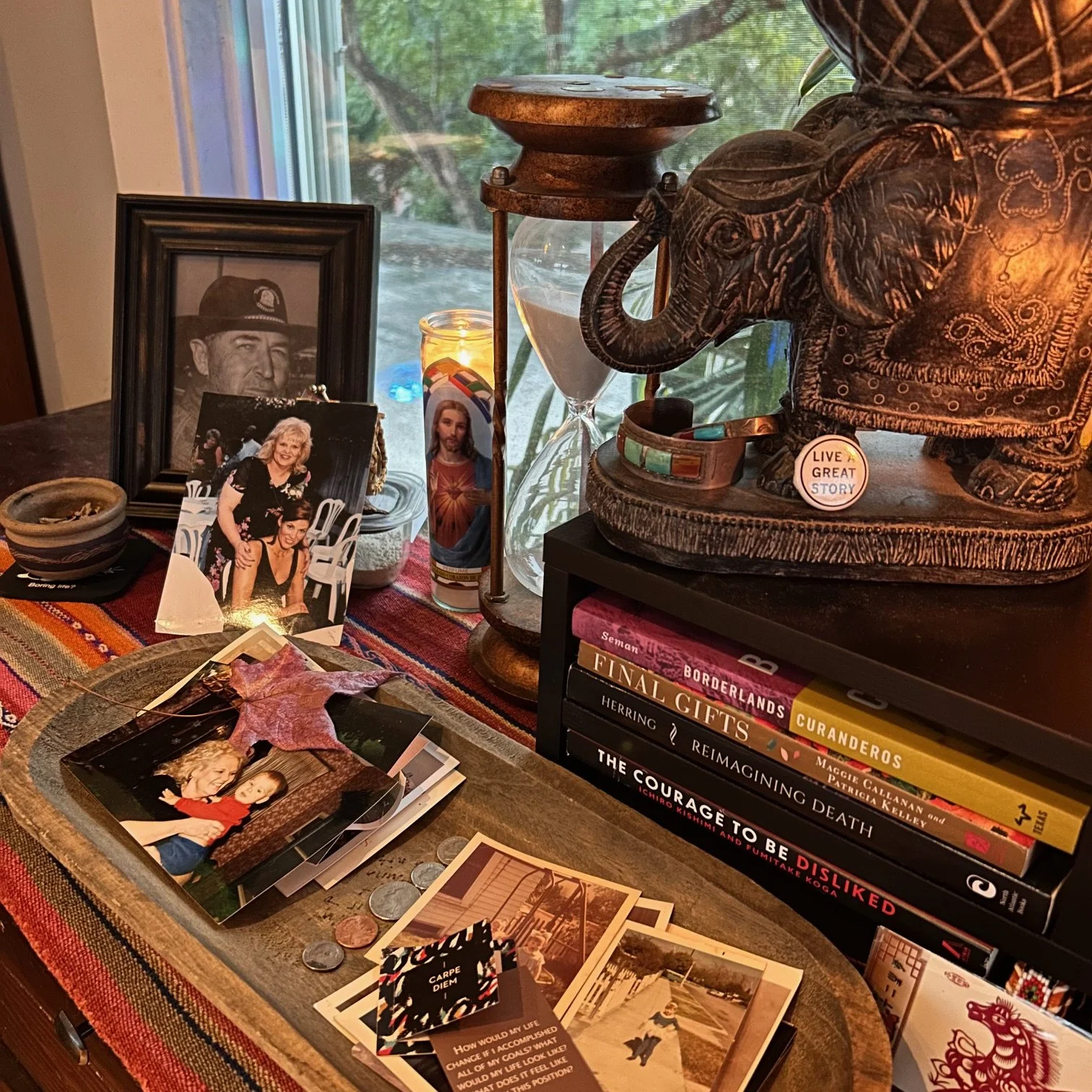
Vigils - a time to pause, reflect and say good-bye.
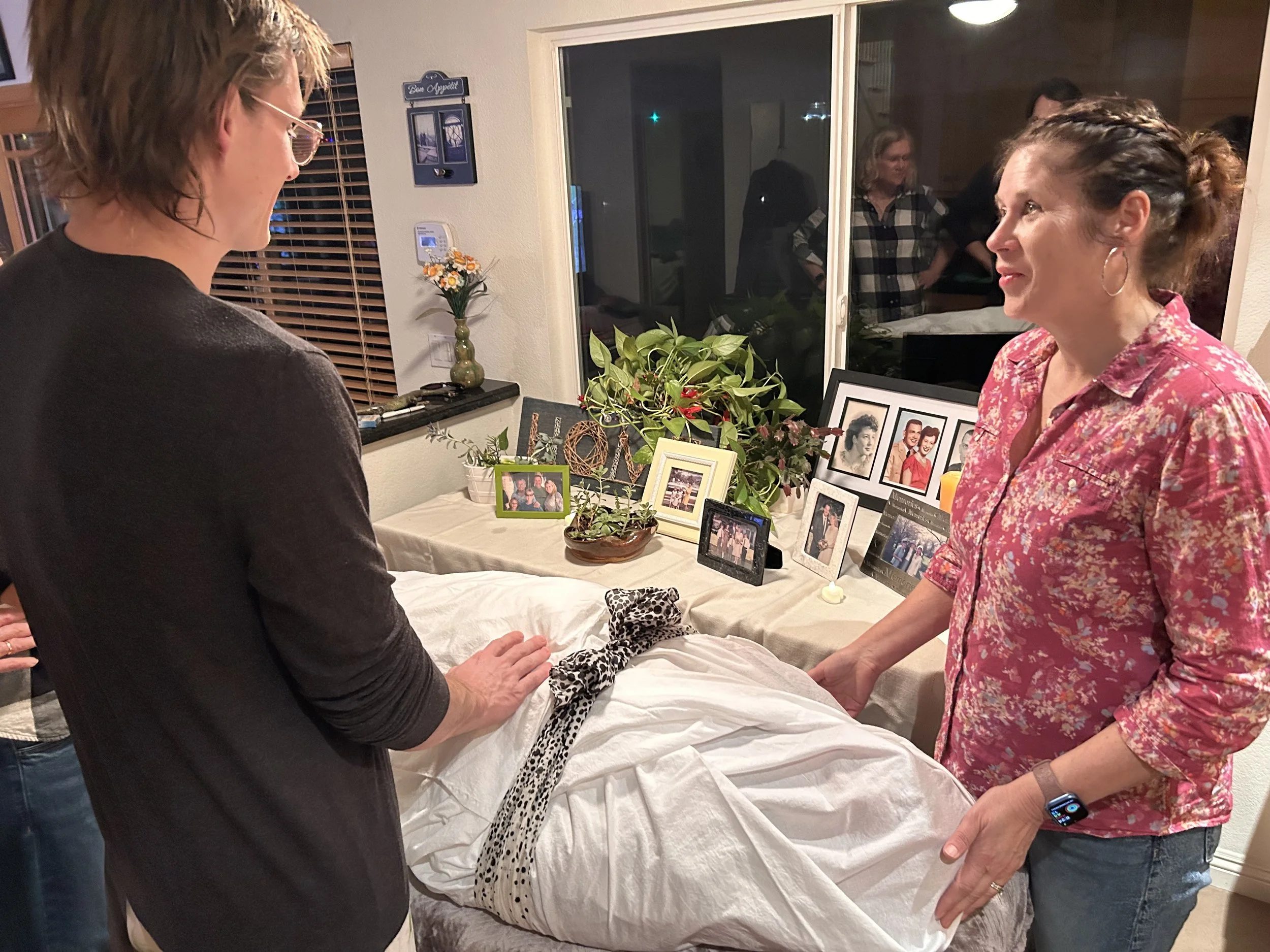
Guided by a death doula, a vigil is a sacred time of presence and remembrance, and it can take place before or after death - whether coming together prior to death to say good-bye, sitting in support as someone is transitioning, or gathering once they have died
FAQ’S
What is a vigil?
A vigil creates a calm, grounded presence during one of the most tender moments in care. When a trained doula is present, the emotional atmosphere tends to stabilize—families feel supported, oriented, and less overwhelmed. That steadiness ripples outward.
For hospice nurses and physicians, this means they can move through their clinical responsibilities with more ease and clarity. Pronouncements and required documentation can be completed without feeling rushed or pulled in multiple directions. The care team isn’t asked to hold both the medical and emotional weight at the same time, because a dedicated professional is already tending to the family’s needs.
How can incorporating a vigil assist hospice?
A vigil is a non-denominational, intentionally held period of time—typically about 90 minutes - before, during, or shortly after death. It’s a chance for loved ones to gather, slow down, and be present with the transition.
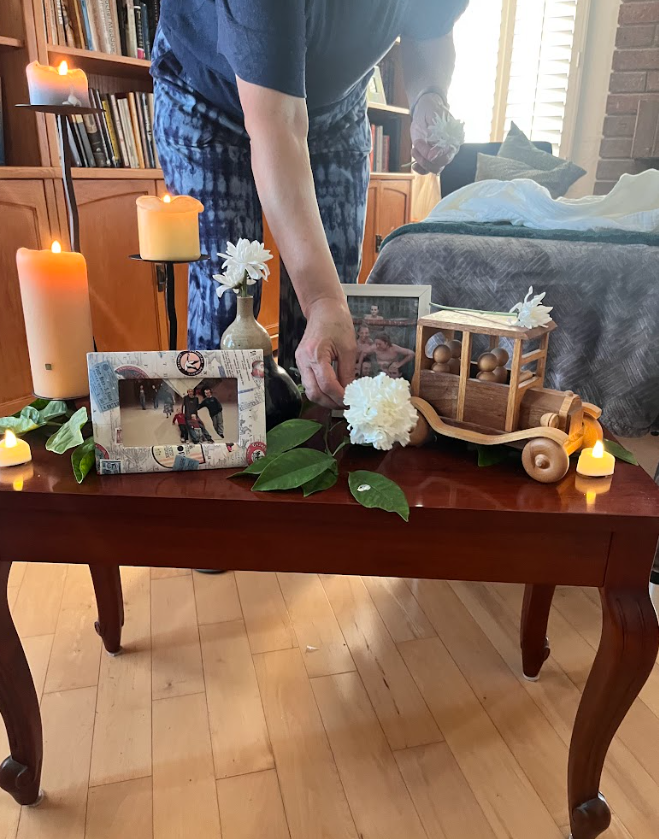
Vigils can be quiet or ceremonial, spiritual or simply reflective. There is no right way to hold one. What matters is that the space allows the family to honor their loved one in a way that feels true to who they were and how they lived.
At its core, a vigil offers families autonomy at a moment that can otherwise feel rushed or clinical - creating room for meaning, connection, and care during a profound threshold.
During a vigil, the death doula serves as a steady, non-medical presence - someone whose sole focus is care, continuity, and the emotional tone of the space. Their role is to support both the family and the moment itself.
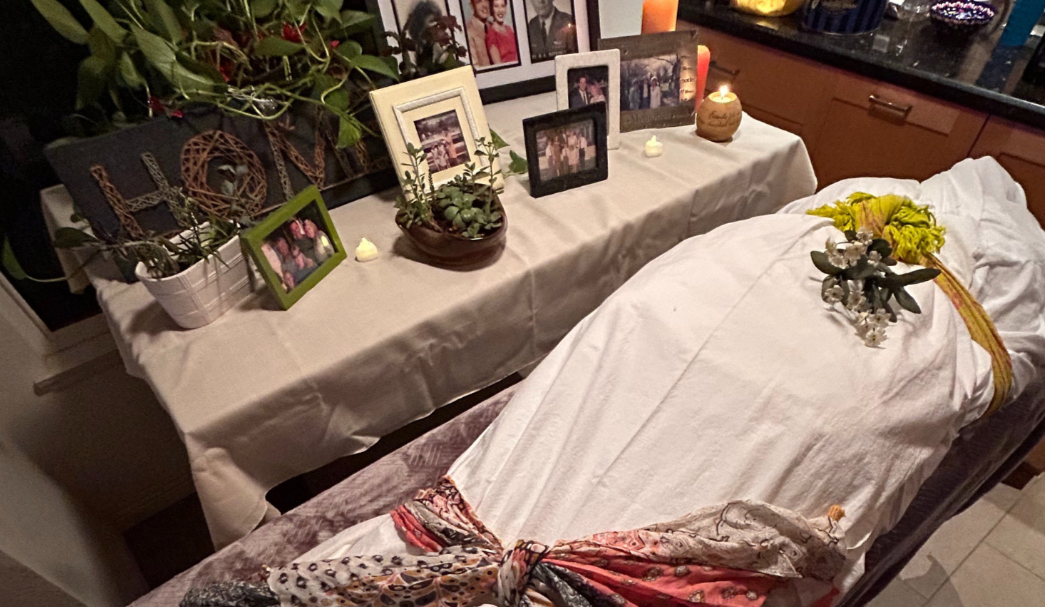
The doula helps hold the space by offering a calm, grounded presence, especially when emotions feel tender or overwhelming. They help create an atmosphere that feels intentional and comforting, tending to lighting, music, and any ritual elements the family wishes to include.
They also gently guide the family through the vigil, offering prompts or creative ways to remember and honor their loved one, while always following the family’s lead. Nothing is forced; the doula simply helps make space for meaning to emerge.
Behind the scenes, the doula acts as a point of coordination, bridging communication between hospice, the family, and the funeral home so families can remain present without needing to manage logistics in the moment.
What is the role of a death doula during a vigil?
Is a vigil a religious ceremony?
Not necessarily. Vigils are for everyone. While we honor all traditions and are happy to include religious or cultural rituals when requested, a vigil does not require any specific belief system.
Our doulas do not hold a particular religious affiliation. Instead, they facilitate whatever feels meaningful to the family - whether that’s secular, spiritual, faith-based, or something entirely personal. The intention is to create space that reflects the values, beliefs, and lived experience of the person being honored, without assumptions or requirements.
In California, families have the legal right to keep the body at home for a reasonable period of time. This allows loved ones the opportunity to gather, sit vigil, and say goodbye in a familiar and meaningful setting.
Once a funeral home takes the body into their care, California law requires that the body be placed into refrigeration within 24 hours. Our vigils are typically 90 minutes in length and operate comfortably within these legal guidelines.
We help families understand what to expect and coordinate timing so the experience feels calm, respectful, and fully aligned with both personal wishes and legal requirements.
How long can the body be kept at home?
Does hospice need to stay until transport arrives?
No. Once hospice has pronounced the death and notified Orchid Cremations, the clinical team is free to leave. At that point, their role is complete.
The death doula remains present and takes over coordination, communicating directly with Orchid Cremations and supporting the family while they wait for transport. This allows hospice staff to step away, knowing the family is not alone and that logistics are being handled with care.
Who has the legal right to make these decisions?
In California, the legal right to make decisions about a person’s remains is clearly defined under Health & Safety Code 7100. This law outlines a specific order of authority, beginning with the person named in a Power of Attorney for Healthcare, followed by a surviving spouse or registered domestic partner, then adult children, and continuing through a set legal hierarchy.
If there is more than one person with equal authority, decisions must be made together. We help families understand who holds this right and support clear, compassionate communication so choices can be made without unnecessary stress or confusion during an already tender time.
To ensure the highest level of care and appropriate staffing, vigils are typically scheduled with at least 24 hours’ notice. Requests made with less than 24 hours’ notice may be accommodated based on availability and may include an additional fee.
To schedule a vigil, please contact Orchid Cremations at 760-291-8842. Our team will help coordinate timing and next steps so the process feels clear, supported, and unhurried.
How to schedule a vigil
Meet the Vigil Coordinators
-
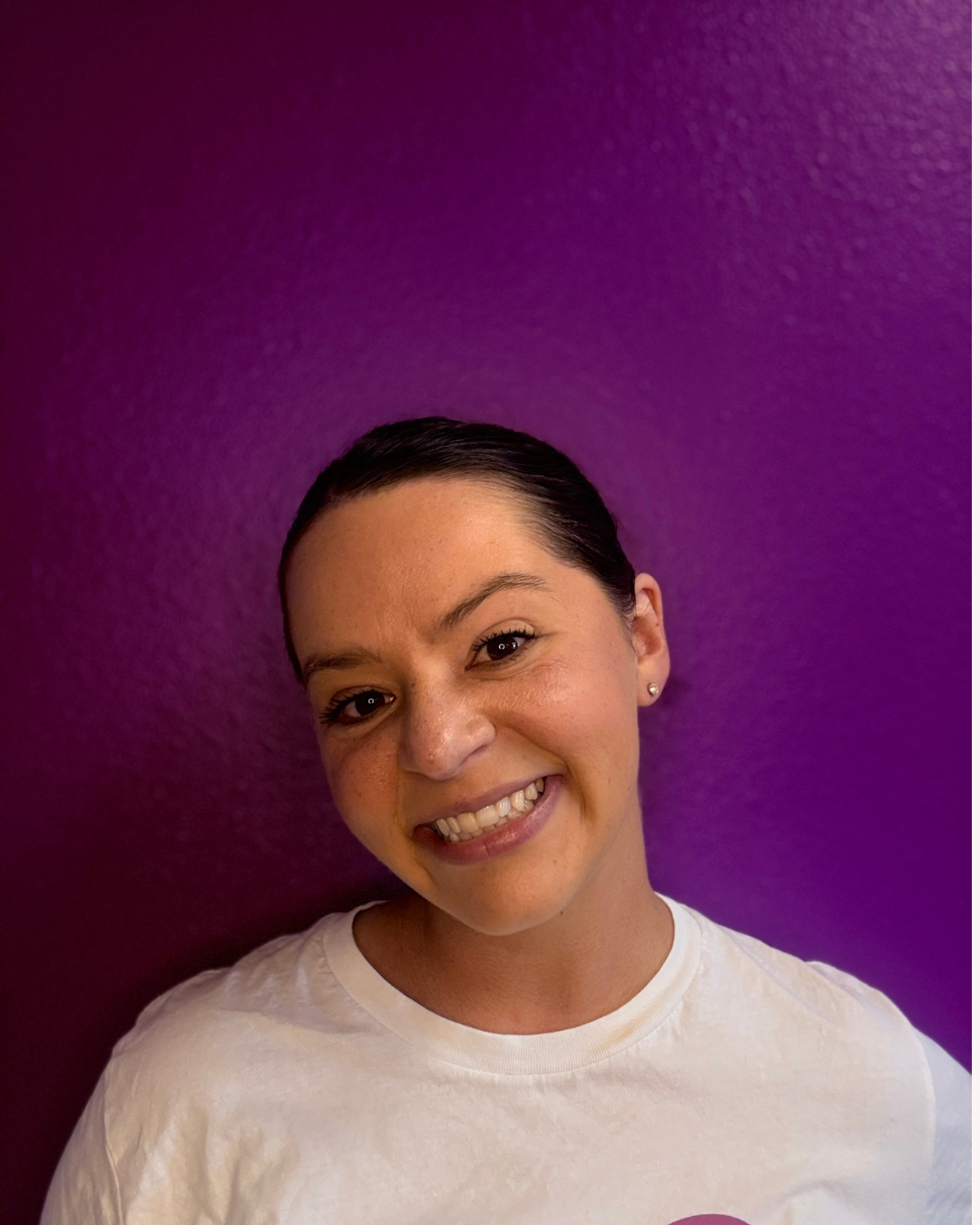
Savannah Turhan
Owner Orchid Cremations & Funeral Director
-
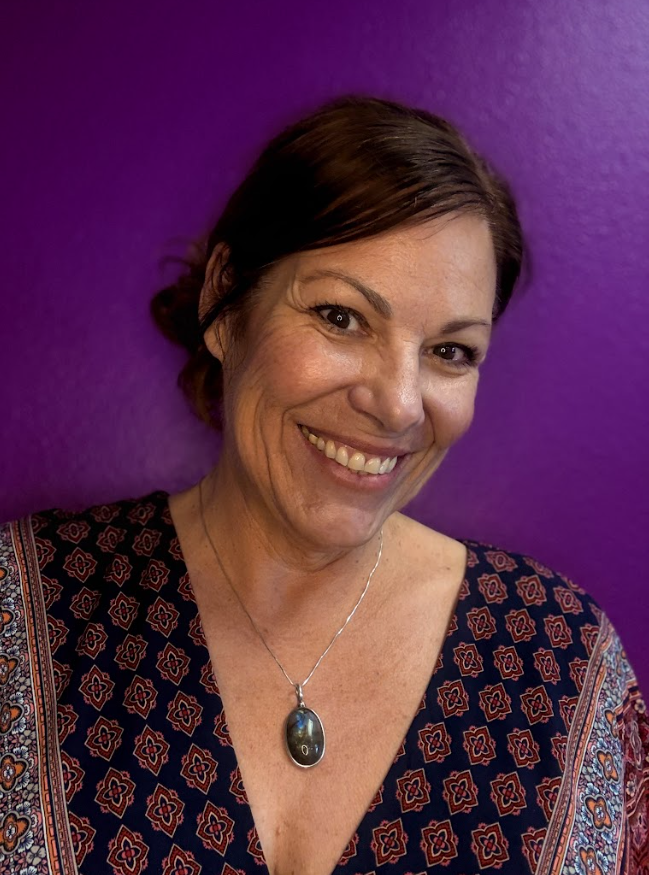
Penny Waugh
Founder The Death Network & Funeral Arranger
-
Tara Novak
Death Doula & Funeral Arranger
-

Kara Hallett
Death Doula & Funeral Arranger
Legal Considerations
1. The Right to Control Remains & Custody (HSC § 7100)
Under California law, the "right to control the disposition of the remains of a deceased person, the location and conditions of interment, and arrangements for funeral goods and services" resides with the family in a specific hierarchy.
The Law: Unless other directions have been given by the decedent, the right of custody and duty of disposition devolves upon: (1) The agent under a power of attorney for health care with the right to control disposition, (2) The surviving spouse or registered domestic partner (CA does not recognise common law marriage), (3) The sole surviving adult child (or majority thereof), (4) The surviving competent parent or parents of the decedent, (5) The sole surviving competent adult sibling of the decedent or, if there is more than one surviving competent adult sibling of the decedent, the majority of the surviving competent adult siblings
Clinician Note: This statute gives the family the legal right to keep their loved one at home for a vigil. There is no California law requiring the immediate removal of a body by a funeral home.
2. Pronouncement and Death Registration (HSC § 102800 & § 102825)
This section outlines the requirements for certifying the time and cause of death.
The Law (HSC § 102800): The physician last in attendance (or the medical examiner) is responsible for stating on the certificate of death the disease or condition directly leading to death.
Hospice Pronouncement: Under California nursing protocols and hospice regulations, an RN may pronounce death in a hospice setting when the death is expected. The Doula does not pronounce death; they wait for the hospice clinician to complete this clinical duty before arranging for removal of the body from the place of death.
3. The 24-Hour Refrigeration Window (16 CCR § 1223.1)
One of the most common concerns is how long a body can remain at home.
The Law: While the Health and Safety Code handles the body, the California Code of Regulations (Title 16, § 1223.1), governed by the Cemetery and Funeral Bureau, states: "Remains shall be refrigerated... if the remains are not embalmed... within 24 hours of death."
Clinician Note: Because Orchid’s vigils are 90 minutes and transportation is coordinated typically within ~2 hours of pronouncement, the vigil remains well within the legal 24-hour window for non-refrigerated remains.
4. Embalming is Not Required (HSC § 7304)
Hospice families often ask if they must embalm if they choose a vigil or cremation.
The Law: California law does not require embalming. HSC § 7304 prohibits a funeral director from embalming without the express permission of the person with the right to control remains (HSC 7100).
Clinician Note: This supports the "natural" approach of the Orchid Vigil. The Doula uses non-invasive cooling techniques (like gel packs) to maintain the body during the short duration of the vigil.
5. Transport and Disposition (HSC § 103050)
The movement of the body is regulated by the Permit for Disposition.
The Law: A person shall not dispose of human remains or remove them from the registration district without a permit.
Clinician Note: Orchid Cremations handles all legal filing and procurement of the Permit for Disposition (E-DRS). The transition from the home to Orchid’s care is fully compliant with California's electronic death registration requirements.
Visit The Department of Consumer Affairs Cemetery & Funeral Bureau for addition legal information.