Full Body Burial at Sea FAQs
The Death Network FAQs for Full Body Sea Burial
How far offshore does a whole-body sea burial take place?
1
In the United States, whole-body sea burials must take place at least 3 nautical miles (3.5 standard miles) offshore in waters at least 600 feet deep. These regulations, established by the U.S. Environmental Protection Agency (EPA), help ensure the burial occurs in an environmentally responsible manner.
How long does it take for a body to naturally decompose in the ocean?
2
There isn't a single answer. The rate of natural decomposition depends on many factors, including water temperature, depth, ocean currents, oxygen levels, and marine life. In general, an unembalmed body prepared in a biodegradable shroud or casket will naturally return to the marine ecosystem over time, but the exact timeline varies considerably.
Will the body float back to the surface?
3
No. A body prepared for a legal sea burial is carefully weighted to ensure it descends to the ocean floor and remains there. Proper preparation is an important part of every sea burial.
Are sharks going to demolish me?
4
Probably not! Hollywood has given us a dramatic picture of what happens in the ocean, but the reality is much less sensational. Deep ocean ecosystems are very different from coastal waters. Marine organisms, bacteria, crustaceans, fish, and other sea life all contribute to the natural process of decomposition. Rather than becoming the focus of a shark frenzy, the body gradually becomes part of the ocean's natural cycle, returning nutrients to the ecosystem.
Can anyone choose a sea burial?
5
In most cases, yes. Sea burial is available to many people, although logistics, costs, and local providers vary. Families can choose between scattering cremated remains or arranging a full-body sea burial, depending on their wishes and applicable regulations.
Should I be embalmed if choosing full body sea burial?
6
No. In fact, whole-body sea burials are typically performed without embalming, allowing the body to return naturally to the marine environment. Biodegradable materials are used whenever possible.
Embalming chemicals are toxic and not compatible with sea life.
Can families attend a sea burial?
7
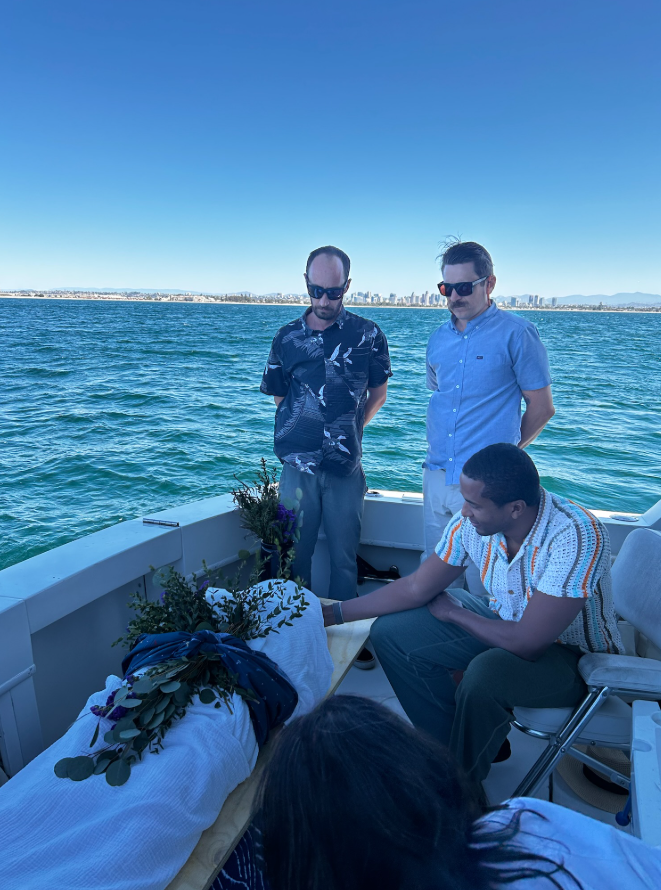
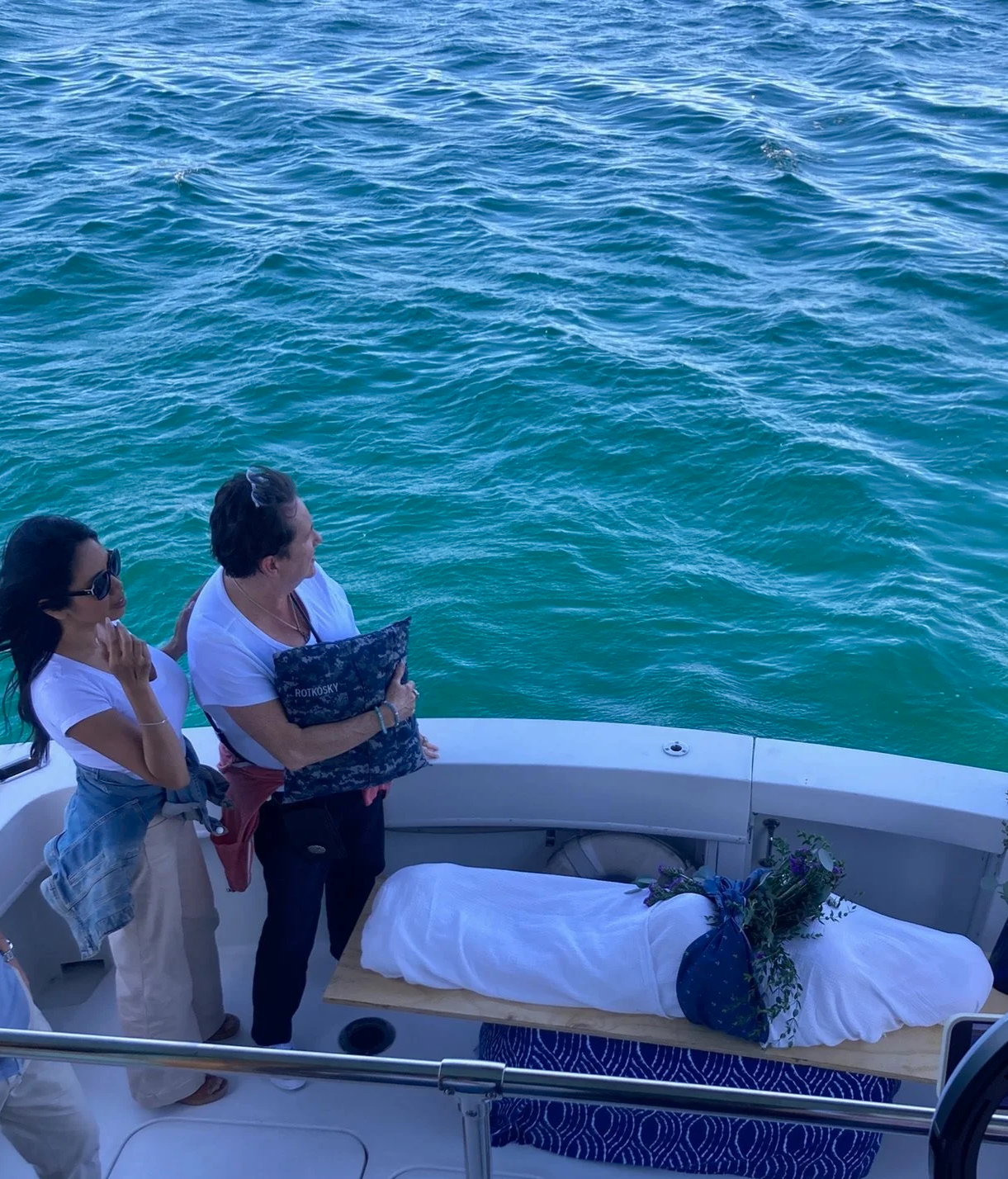
Absolutely. Many families choose to be present for the burial and create a personalized ceremony that reflects the life of their loved one. Some include music, readings, flowers, or moments of silence before the body or cremated remains are committed to the sea.
Can flowers or other items be placed in the ocean?
8
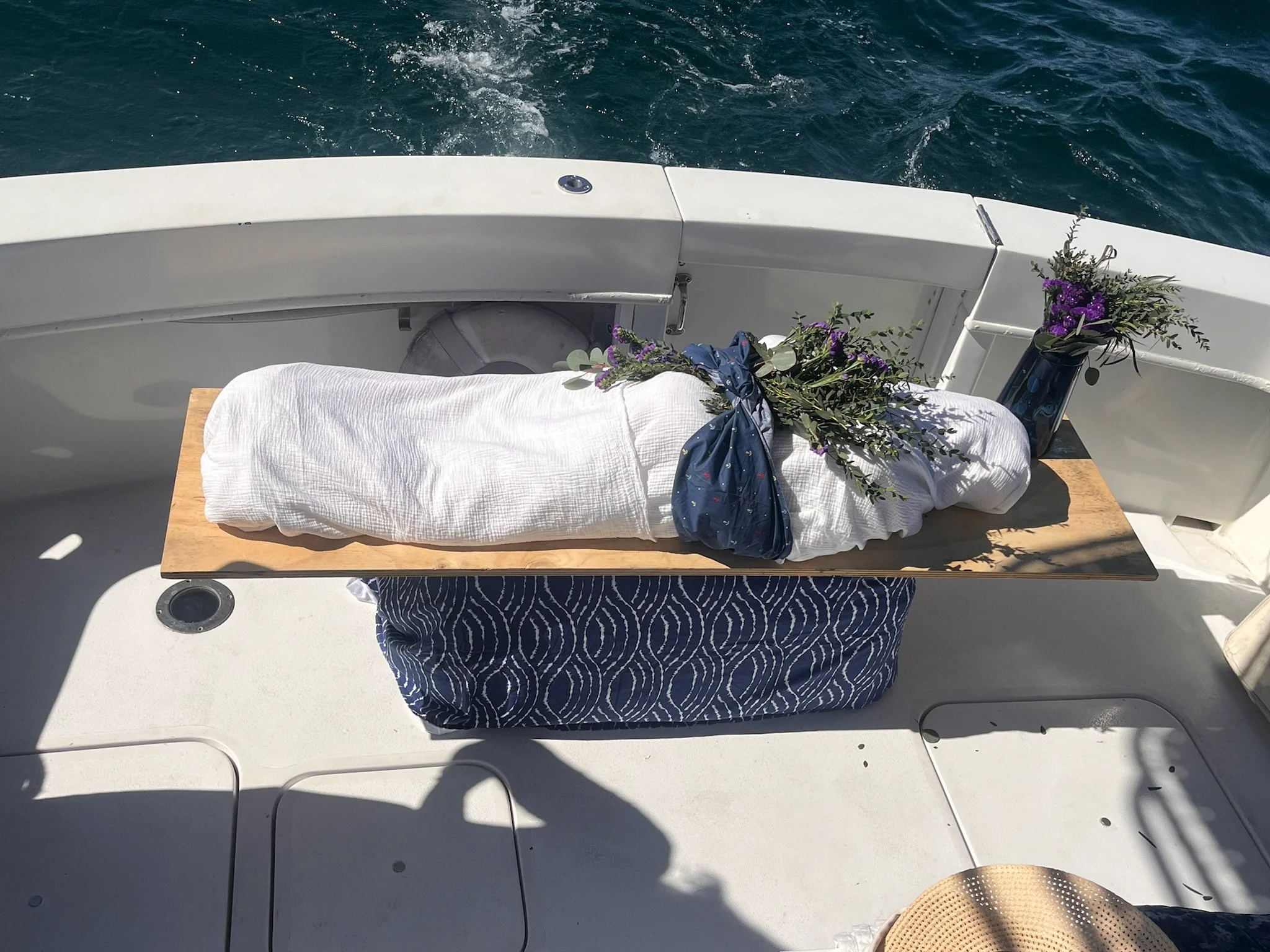
Natural flowers and biodegradable items are generally welcome. Plastic, artificial flowers, balloons, metal objects, and other non-biodegradable materials should never be released into the ocean. Sea burials are designed to honor both the individual and the marine environment.
Why are more people considering sea burial?
9
For many, sea burial offers a meaningful alternative to traditional burial or cremation. Some are drawn to its simplicity, others to its environmental benefits, and many simply feel a deep connection to the ocean. Like all end-of-life choices, the best option is the one that reflects a person's values, beliefs, and wishes.
Considering Burial at Sea?
Whether you're exploring options for yourself or someone you love, it's natural to have questions. From how far offshore a sea burial takes place to what really happens beneath the surface, we've answered some of the most common questions to help you better understand this meaningful and environmentally conscious end-of-life option.
Check out our latest article, Full-Body Sea Burial: An Ancient Tradition and Modern Green Burial Alternative for a deeper look at the history, process, environmental benefits, and why more people are considering this unique end-of-life choice:
Have a question about sea burial?