Full Body Sea Burial: An Ancient Tradition and Modern Green Burial Alternative
Sea Burial; An Ancient Tradition Finding New Relevance
Long before modern funeral homes, cemeteries, and crematories, people throughout the world honored their dead by returning them to the sea. For thousands of years, sailors, coastal communities, fishing families, and maritime cultures practiced sea burial as a meaningful and practical way to care for the body after death.
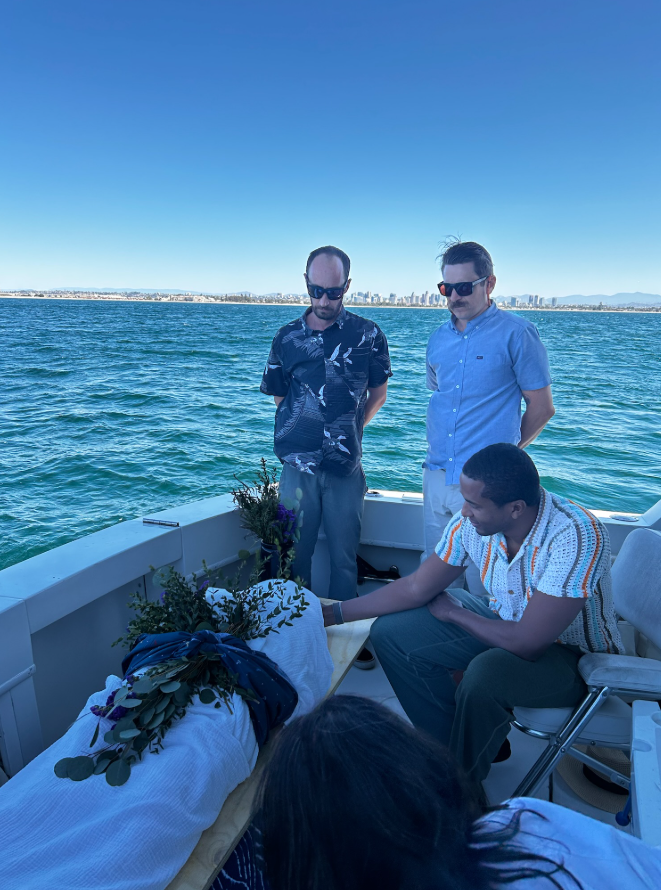
"People often think full-body sea burial sounds unusual until they experience it firsthand. Standing on the open ocean beneath a wide blue sky, sharing a final farewell with someone they love, many families find their perspective transformed. Sea burial invites us into the mystery of nature, the mystery of death, and ultimately, the mystery of life itself."
Chris Anderson Water & Ash Burials
While many people associate sea burial with naval traditions, today's ocean burials are part of a growing movement toward more natural end-of-life options. As families become increasingly aware of the environmental impact of conventional burial and flame cremation, many are seeking alternatives that align more closely with their values and relationship with the natural world.
In California, that search can be challenging. Although interest in green burial continues to grow, dedicated green burial cemeteries remain limited and are not accessible to every family. For those who feel called to a more natural approach, sea burial offers another meaningful option.
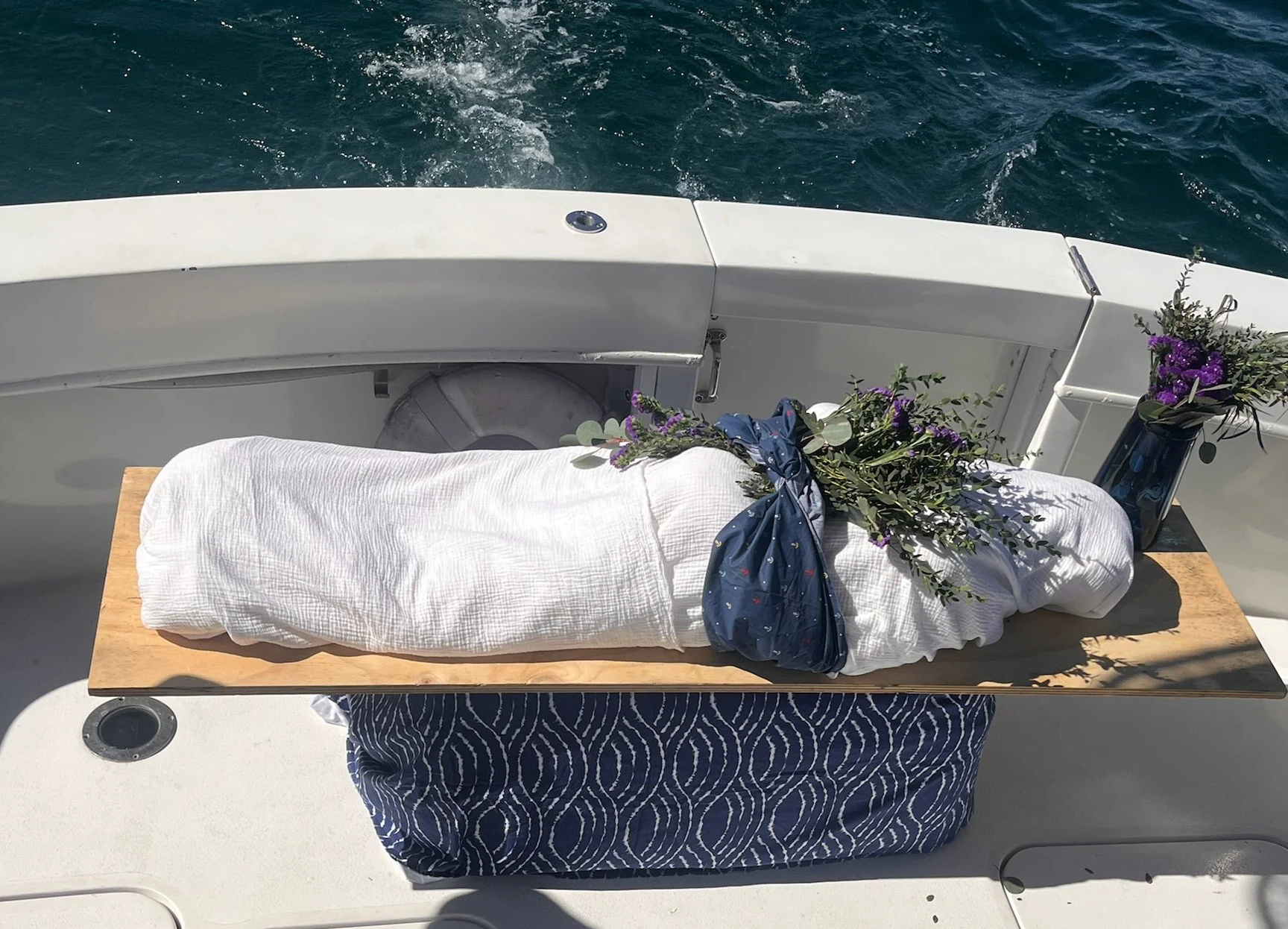
Unlike conventional burial, which often involves embalming chemicals, metal caskets, and concrete vaults, a full-body sea burial uses biodegradable materials designed to return naturally to the marine environment. Bodies are typically wrapped in a natural fiber shroud or placed in a biodegradable wicker vessel and committed to the ocean in accordance with strict federal regulations.
Raina of Sea Spirit Memorial in Santa Cruz CA describes the growing interest in ocean burial as a natural evolution. What began as a focus on ash scattering ceremonies expanded as more families started asking for a greener, full-body alternative. "The more people learn about it," she explains, "the more interest there seems to be."
For San Diego families, sea burial offers something that many modern funeral options do not: a direct and tangible return to nature. Surrounded by the Pacific Ocean, our community has a deep connection to the water. For surfers, sailors, beach lovers, military veterans, fishermen, and anyone who simply felt at home near the coast, a sea burial can reflect not only how they wished to be cared for after death, but also how they lived.
What Happens During a Sea Burial?
Many people are familiar with a graveside service, where family and friends gather at a cemetery to witness the burial of a loved one. A sea burial offers a similar opportunity for presence, ritual, and farewell - except instead of gathering graveside, families gather seaside aboard a vessel on the open ocean.
For those seeking a lower-impact option, the body is typically not embalmed. Rather than being placed in a traditional casket, the body is carefully wrapped in a biodegradable canvas shroud or bag. Natural materials such as sand or stones are incorporated to ensure the body descends safely to the ocean floor.
Federal regulations require that full-body sea burials take place at least three nautical miles from shore and in waters deep enough to protect the marine environment—typically more than 600 feet deep along the California coast. Once the vessel reaches the designated location, family and friends may share stories, offer prayers, read poetry, play music, or simply witness the moment of release.
As the body returns to the sea, it becomes part of a natural ecological cycle. Marine organisms and sea life contribute to the process of decomposition, allowing the body to return naturally to the environment. Families often find comfort in knowing that this return happens gently and relatively quickly, without the use of chemicals, concrete vaults, or permanent land use.
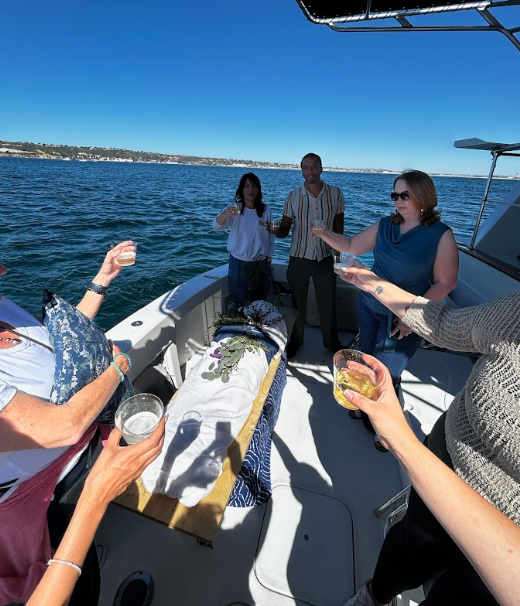
A Different Type of Funeral Ceremony
Following the burial, the vessel's captain records the exact GPS coordinates of the location and provides them to the family. Many families choose to return to that spot in the future, creating a meaningful place of remembrance on the water.
For people who felt most at home near the ocean, a sea burial can be more than an environmentally conscious choice. It can be a final journey that reflects a lifelong connection to the rhythms, beauty, and vastness of the sea.
A Tradition Rooted in Maritime History
Sea burial has been practiced for thousands of years, but many Americans are most familiar with its connection to naval tradition. For centuries, sailors who died while at sea were committed to the ocean when returning to land was not possible. These ceremonies were often solemn and deeply meaningful, bringing crews together to honor a shipmate before continuing their voyage.
That tradition continues today. The U.S. Navy still offers sea burial for eligible veterans, active-duty service members, retirees, and their family members. Conducted with military honors, these ceremonies reflect a longstanding respect for both service and the sea.
Modern civilian sea burials share many of the same values. Family and friends gather aboard a vessel, stories are shared, rituals are observed, and loved ones witness the final act of returning the body to nature. While the setting differs from a cemetery, the purpose remains the same: to create a meaningful moment of remembrance, gratitude, and farewell.
For coastal communities like San Diego, where the ocean shapes both lifestyle and identity, sea burial offers a tradition that feels both timeless and deeply personal. What was once primarily associated with sailors and naval service is now becoming an increasingly meaningful choice for anyone who feels connected to the sea and wishes for a natural return after death.
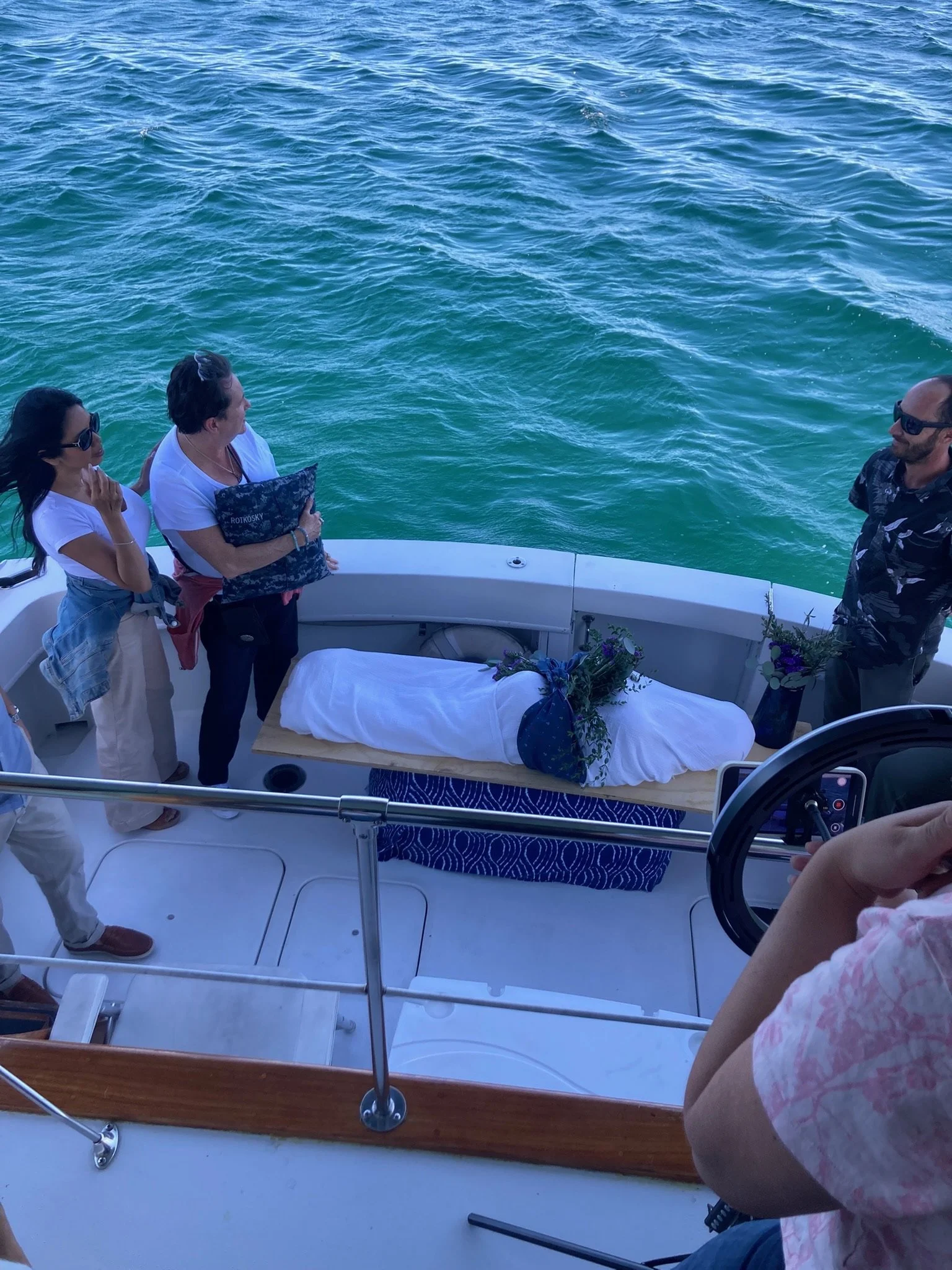
Doing Death Different
"Chris Anderson of Water & Ash Burials says interest in full-body sea burial continues to grow. While he and his crew regularly take families out to scatter cremated remains, he's encouraged to see more people looking beyond conventional funeral options and discovering meaningful, environmentally conscious ways to tend to their body after death. 'People want choices,' Anderson notes. 'They're looking for options that reflect their values, their connection to nature, and how they lived their lives.'"
Photos are from Water & Ash - a San Diego based full-body sea burial and cremated remains (ash) scattering. info@waterandashburials.org